Hello, and welcome back to Metagame Mentor, your weekly guide to the top decks and latest Constructed developments on the path to the Pro Tour. This past weekend, nearly 2,000 players in total competed across four premier Standard events: Magic Spotlight: Teenage Mutant Ninja Turtles and the Regional Championships for Europe/Middle East/Africa, Chinese Taipei, and Mexico/Central America/Caribbean. Together, these tournaments awarded 51 coveted invitations to the Pro Tour and precious seats at Magic World Championship 32.
In this article, I'll break down the Standard metagame, examine win rates across the major archetypes, and highlight the breakout Magic: The Gathering® | Teenage Mutant Ninja Turtles cards. But first, it's time for a well-deserved congratulations to the newly crowned champions.
Congratulations to the Champions!
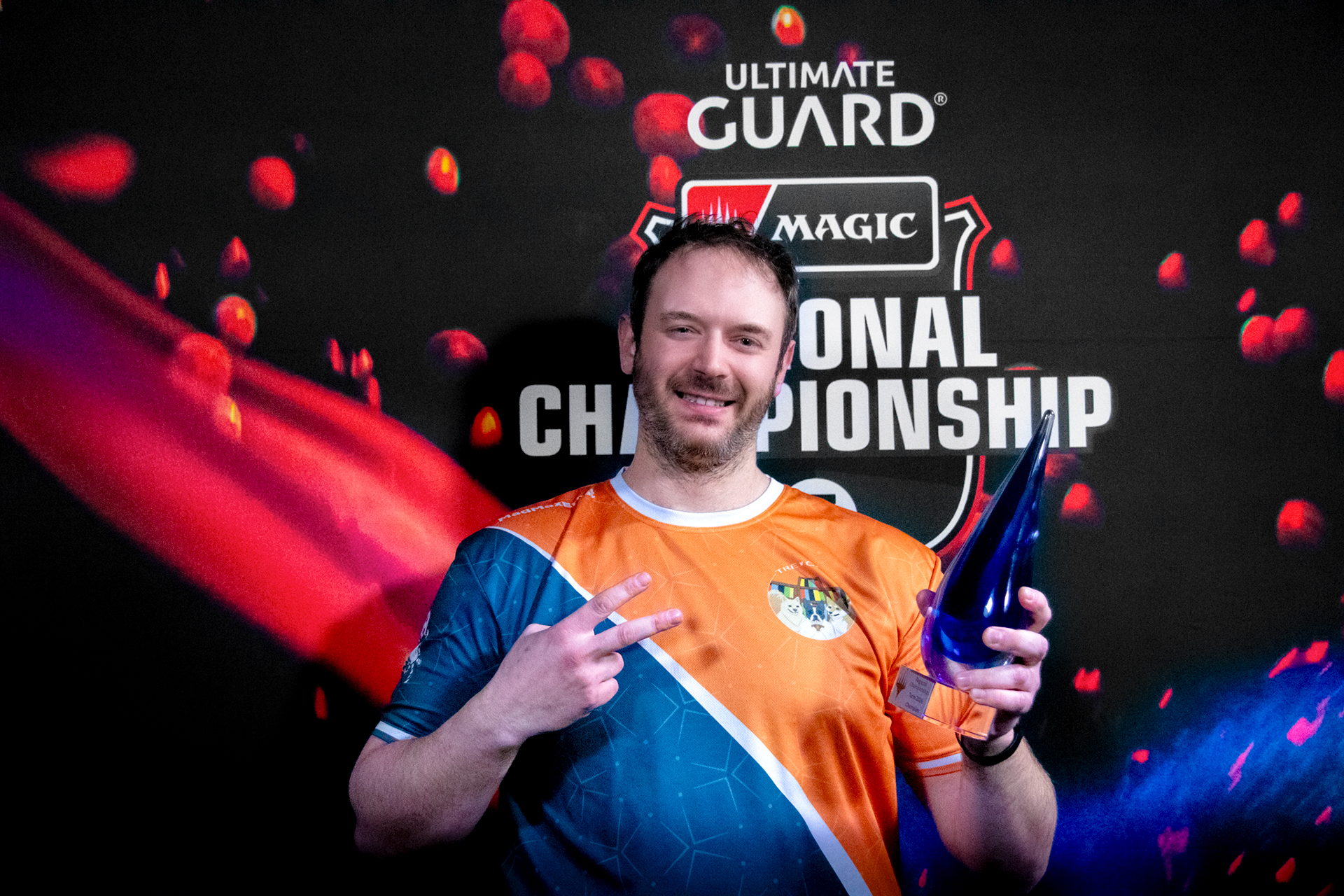
Andrea-Fortunati, winner of Ultimate Guard European Magic Series: Turin

Jorge Lopez, winner of Central America Magic Series Regional Championship: Mexico City

Lee Shi Tian, winner of MIT Championship Finals: Taipei City
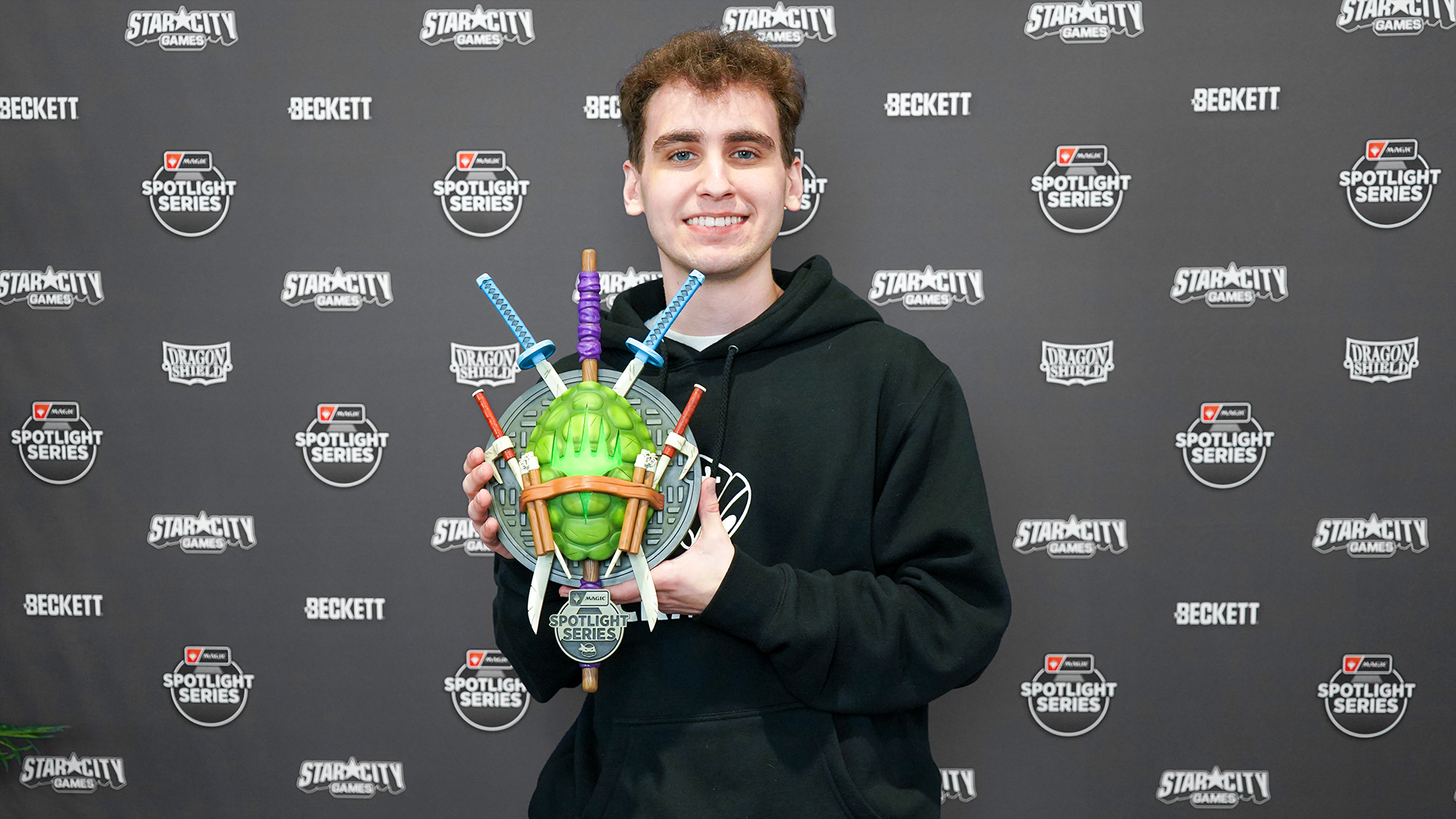
John Puglisi Clark, winner of Magic Spotlight: Teenage Mutant Ninja Turtles
While Mono-Green Landfall emerged as the weekend's most successful deck, claiming two of the four trophies and nine of the 51 Pro Tour-qualifying slots, a wide variety of strategies proved competitively viable. In total, eighteen distinct archetypes were represented among the 51 qualifying finishes, which is a testament to Standard's depth and diversity.
The Standard Metagame and Win Rates
Standard, the rotating 60-card format that currently allows expansion sets from Wilds of Eldraine forward, is one of Magic's premier competitive formats. Across Magic Spotlight: Teenage Mutant Ninja Turtles, the Ultimate Guard European Magic Series Regional Championship, the MIT Championship, and the Central America Magic Series Regional Championship, a total of 1,913 Standard decklists were available for analysis. After setting archetype names based on each deck's contents, I compiled the overall metagame share and match win rates for each archetype (excluding mirror matches, byes, and draws).
In this table, each archetype name hyperlinks to a top-performing decklist that closely reflects its aggregate build. The "Other" category collects decks with one percent metagame share or less, including Four-Color Control, Grixis Elementals, Boros Mobilize, Azorius Momo, Bant Rhythm, Azorius Control, Azorius Otters, Esper Pixie, Selesnya Landfall, Esper Midrange, Dimir Control, Esper Tempo, Grixis Reanimator, Gruul Harmonizer, Jeskai Midrange, Simic Omniscience, Sultai Control, Dimir Deceit, Jeskai Artifacts, and more.
Compared to the metagame at premier tournaments during the weekend of February 21–22, Simic Rhythm declined in popularity, while Izzet Prowess continued to build momentum. Just a month ago, when I wrote a format primer introducing Standard's top decks, Izzet Prowess was barely a blip on the radar. This past weekend, however, it had surged to become the most-played deck in the combined field. Nearly 14% of competitors relied on a flurry of cheap card-draw spells to churn through their library while steadily growing the power of Elusive Otter and Slickshot Show-Off. The deck also kept evolving: three-quarters of the Izzet Prowess lists this past weekend included at least one main deck copy of Drake Hatcher to bolster their creatures.
While Izzet Prowess confirmed its strength with a sizable metagame share and a strong 53.5% win rate against the rest of the field, a new challenger rose to confront it. The true breakout deck of the weekend was the affectionately named Momo White.
3 Voice of Victory
4 Momo, Friendly Flier
16 Plains
4 Sage of the Skies
4 Abandoned Air Temple
4 Starfield Shepherd
1 Soulstone Sanctuary
3 Cosmogrand Zenith
4 Seam Rip
3 Nurturing Pixie
2 Figure of Fable
4 Haliya, Guided by Light
4 Springleaf Drum
4 Get Lost
2 Requisition Raid
3 Sheltered by Ghosts
1 Curious Farm Animals
4 Rest in Peace
4 Clarion Conqueror
1 Kinbinding
Momo White (also known as Mono-White Momo, Momo Drum, or Mono-White Aggro) is capable of explosively fast starts. Imagine leading with Momo, Friendly Flier on turn one, followed by Springleaf Drum and Sage of the Skies on turn two. That early pair of 2/3 flying lifelinkers can quickly put you ahead in the damage race while letting you draw extra cards with Haliya, Guided by Light on subsequent turns.
Momo, Friendly Flier also reduces the cost of warping Starfield Shepherd, which can fetch Nurturing Pixie to bounce itself and keep the engine humming. This lets you flood the board with inexpensive fliers. After going wide, Cosmogrand Zenith and Abandoned Air Temple can pump your entire team at once. Overall, the deck's efficient blockers and removal spells line up well against Slickshot Show-Off, giving it a favorable matchup against Izzet Prowess. And with powerful, high-impact sideboard cards such as Clarion Conqueror and Rest in Peace, the strategy is well-rounded against the broader field.
Looking over the decks with the highest metagame shares and win rates, Standard appears well balanced, with no deck dominating unchecked. Every archetype has clear strengths and weaknesses, illustrated by the following overview based on the match results from last weekend's events.
- Momo White: Favored against Izzet Prowess and Izzet Lessons; struggles against Mono-Green Landfall and Dimir Excruciator.
- Mono-Green Landfall: Favored against Dimir Excruciator and Azorius Tempo; struggles against Simic Rhythm and Bant Airbending.
- Izzet Prowess: Favored against Dimir Excruciator and Dimir Midrange; struggles against Izzet Spellementals and Momo White.
- Izzet Lessons: Favored against Dimir Midrange and Dimir Excruciator; struggles against Azorius Tempo and Momo White.
- Dimir Midrange: Favored against Azorius Tempo and Izzet Spellementals; struggles against Izzet Prowess and Izzet Lessons.
- Izzet Spellementals: Favored against Izzet Prowess and Simic Rhythm; struggles against Dimir Midrange and Dimir Exruciator.
Over the past month, Standard has continued to churn and adapt. While Mono-Green Landfall and Izzet Prowess have maintained the highest win rates across recent weekends with large sample sizes, choosing the right deck for a tournament still depends heavily on your expectations of the metagame. If Izzet Prowess remains the most-played deck, then Momo White appears well-positioned.
Most-Played Cards from Magic: The Gathering | Teenage Mutant Ninja Turtles
Magic: The Gathering | Teenage Mutant Ninja Turtles introduced a suite of potent tools to Standard. Below is an overview of the twenty new-to-Standard cards that have seen the most play across the 1,913 decklists I reviewed from last weekend's events.
| Card Name |
Total Copies |
Main Deck |
Sideboard |
| 1. Leatherhead, Swamp Stalker |
622 |
351 |
271 |
| 2. Cool but Rude |
372 |
370 |
2 |
| 3. Dream Beavers |
249 |
249 |
0 |
| 4. Mikey & Leo, Chaos & Order |
170 |
169 |
1 |
| 5. Michelangelo's Technique |
77 |
77 |
0 |
| 6. Tokka & Rahzar, Terrible Twos |
75 |
40 |
35 |
| 7. Casey Jones, Vigilante |
69 |
68 |
1 |
| 8. The Last Ronin's Technique |
66 |
66 |
0 |
| 9. Michelangelo, Weirdness to 11 |
64 |
62 |
2 |
| 10. Super Shredder |
63 |
59 |
4 |
| 11. Shredder's Technique |
45 |
22 |
23 |
| 12. North Wind Avatar |
39 |
38 |
1 |
| 13. The Ooze |
35 |
5 |
30 |
| 14. Does Machines |
33 |
33 |
0 |
| 15. Donatello's Technique |
31 |
31 |
0 |
| 16. Raphael, the Nightwatcher |
25 |
25 |
0 |
| 17. Go Ninja Go |
25 |
25 |
0 |
| 18. Krang, Master Mind |
23 |
21 |
2 |
| 19. Armaggon, Future Shark |
23 |
20 |
3 |
| 20. Mutagen Man, Living Ooze |
19 |
17 |
2 |
To better understand the impact of these additions, let's take a closer look at the ten most-played new cards and the archetypes that have incorporated them most successfully.
Leatherhead, Swamp Stalker [172VswWxvHaaJ1k6mk3vmo]
2 Promising Vein
1 Bushwhack
4 Earthbender Ascension
2 Archdruid's Charm
3 Sapling Nursery
4 Sazh's Chocobo
4 Llanowar Elves
4 Icetill Explorer
4 Badgermole Cub
4 Fabled Passage
14 Forest
3 Leatherhead, Swamp Stalker
3 Mightform Harmonizer
3 Escape Tunnel
3 Ba Sing Se
2 Mossborn Hydra
1 Origin of Metalbending
1 Surrak, Elusive Hunter
2 Torpor Orb
1 Keen-Eyed Curator
3 Meltstrider's Resolve
1 Longstalk Brawl
2 Pawpatch Formation
2 Soul-Guide Lantern
2 Mossborn Hydra
The most-played new card by a wide margin was Leatherhead, Swamp Stalker. Leatherhead offers a sizable body, built-in protection against removal spells, and a clean answer to enchantments and artifacts like Monument to Endurance, Artist's Talent, Seam Rip, and Sapling Nursery. In total, 305 players (15.9% of the field) included at least one copy of Leatherhead, Swamp Stalker in their main deck or sideboard. These decks consisted of 177 Mono-Green Landfall, 44 Simic Rhythm, 21 Temur Harmonizer, 20 Bant Airbending, 6 Bant Rhythm, 6 Selesnya Landfall, and 31 other archetypes.
Although Leatherhead frequently appeared in sideboards, it's a perfectly serviceable main deck inclusion as well. Michael Paluta finished in 4th place at Magic Spotlight: Teenage Mutant Ninja Turtles with three copies in his main deck. It has largely taken the slots once occupied by cards like Fecund Greenshell a few weeks ago, and it looks particularly well-positioned against Izzet Lessons. Leatherhead, Swamp Stalker fits naturally in Mono-Green Landfall because it can remove any counters for its Naturalize effect, including +1/+1 counters from Earthbender Ascension. Moreover, Mightform Harmonizer with Fabled Passage can turn it into a towering 20-power, hexproof trampler.
Cool but Rude
Casey Jones, Vigilante [7J3LR0nEjqR4rpu6XCDfSR]
2 Inti, Seneschal of the Sun
3 Swamp
4 Iron-Shield Elf
4 Starting Town
3 Mountain
4 Multiversal Passage
2 Monument to Endurance
3 Bloodthorn Flail
4 Moonshadow
2 Bitter Triumph
4 Marauding Mako
4 Cool but Rude
2 Requiting Hex
4 Blazemire Verge
3 Flamewake Phoenix
4 Bloodghast
1 Carnage, Crimson Chaos
4 Blood Crypt
3 Casey Jones, Vigilante
2 Intimidation Tactics
3 Duress
2 Chandra, Spark Hunter
1 Shoot the Sheriff
2 Requiting Hex
3 Soul-Guide Lantern
2 Case of the Crimson Pulse
Cool but Rude ranked as the second most-played new card. It turns any attacking creature into a discard outlet, and its second level can quickly burn out the opponent. Roughly one-sixth of the Izzet Lessons decks added the card due to its synergy with Artist's Talent, but it truly shines in Rakdos Discard or Grixis Discard strategies. Previously, these decks were labeled as Rakdos or Grixis Monument, but I updated the archetype name after many trimmed the artifact or cut it entirely, now instead relying on Cool but Rude as their primary payoff.
In this deck, Cool but Rude functions as both an enabler and a payoff for discarding. It allows Moonshadow or Marauding Mako to grow when attacking while enabling you to place Bloodghast or Flamewake Phoenix in your graveyard as early as turn two. If you follow up with Bloodthorn Flail and another Cool but Rude on turn three and level both Classes to level 2 on turn four, you can discard your entire hand for possibly lethal damage. Each discard would then deal 2 damage to your opponent twice, and those triggers stack up quickly. Alternatively, when your hand is empty in the late game, level 3 lets you search for Carnage, Crimson Chaos, which can be cast for its mayhem cost after it's discarded.
Another powerful new addition is Casey Jones, Vigilante. In the late game, Casey Jones can effectively provide three free cards that you might play before having to discard. But even on turn three, Casey Jones is a respectable play. Discarding is rarely a drawback for this deck, since doing so triggers many of your permanents for advantageous effects. While the Grixis Discard builds with Quantum Riddler already had a strong card-advantage creature, the majority of Rakdos Discard lists eagerly adopted this high-synergy three-drop. Klemen Pirc, for example, finished in 10th place at the Regional Championship in Turin with the list shown above.
Dream Beavers
4 Floodpits Drowner
4 Concealed Courtyard
4 Kaito, Bane of Nightmares
4 Stormchaser's Talent
2 Dream Beavers
4 Starting Town
4 Boomerang Basics
1 Get Lost
4 Hallowed Fountain
4 Sunpearl Kirin
1 Island
2 Grim Bauble
1 Momentum Breaker
4 Watery Grave
4 Nurturing Pixie
4 Gloomlake Verge
4 Nowhere to Run
2 Godless Shrine
2 Aang, Swift Savior
2 Sygg, Wanderwine Wisdom
1 Disdainful Stroke
1 Cathar Commando
1 Requiting Hex
1 Seam Rip
2 Tishana's Tidebinder
1 Lord Skitter, Sewer King
2 Get Lost
1 Kutzil's Flanker
2 Appa, Steadfast Guardian
1 Grim Bauble
2 No More Lies
Dream Beavers fills a role similar to Spyglass Siren. As a 1/1 flier, it's an ideal setup piece to ninjutsu Kaito, Bane of Nightmares on turn three or draw cards with Enduring Curiosity on turn four. Over 40% of Dimir Midrange decks included this new one-drop in their main deck, commonly running 4 Spyglass Siren and 4 Dream Beavers for consistency and redundancy. Yet the highest-placing finisher featuring Dream Beavers incorporated it into Esper Pixie.
Just two months ago, Pro Tour champion Samuele Estratti piloted Esper Pixie to a 20th-place finish at Magic Spotlight: The Avatar in Lyon. This past weekend, he improved on that result with a 2nd-place finish at his Regional Championship, earning an invitation to Magic World Championship 32. His success illustrates that deep experience with a beloved archetype often pays dividends. By upgrading two copies of Tinybones Joins Up into two copies of Dream Beavers, Estratti preserved the deck's ability to drain the opponent for the final points of life while slightly increasing the likelihood of a turn-three Kaito.
Mikey and Leo, Chaos and Order [3kyzWdS8IdCcPnKCGdqu7N]
Michelangelo, Weirdness to 11 [kixt3TijnWNXOxwboNzok]
4 Bristly Bill, Spine Sower
4 Earthbender Ascension
4 Escape Tunnel
4 Michelangelo, Weirdness to 11
4 Sazh's Chocobo
4 Snakeskin Veil
3 Ba Sing Se
4 Llanowar Elves
4 Mossborn Hydra
4 Badgermole Cub
1 Mikey and Leo, Chaos and Order [3kyzWdS8IdCcPnKCGdqu7N]
4 Fabled Passage
13 Forest
3 Innkeeper's Talent
2 Surrak, Elusive Hunter
4 Longstalk Brawl
1 Scavenging Ooze
3 Pawpatch Formation
2 Leatherhead, Swamp Stalker
1 Torpor Orb
2 Soul-Guide Lantern
Michelangelo, Weirdness to 11 and Mikey & Leo, Chaos & Order appeared almost exclusively in Mono-Green Landfall and Selesnya Landfall decks, where they unlock intriguing new lines of play. Ivan Saenz, for example, finished second at the Regional Championship in Mexico City with an aggressive Mono-Green Landfall version centered on +1/+1 counter synergies rather than the more customary build that leverages Mightform Harmonizer, Icetill Explorer, and Sapling Nursery for mid-game staying power.
Consider the curve of Michelangelo, Weirdness to 11 on turn two followed by Mossborn Hydra on turn three, which enters as a 2/2 thanks to Michelangelo. On turn four, the Mutagen token upgrades the Hydra to a 4/4. If you play and crack Fabled Passage, the two landfall triggers (both amplified by Michelangelo) let it grow into a 9/9 and then an enormous 19/19 trampler, ready to attack for the win immediately. Add Bristly Bill, Spine Sower or Snakeskin Veil into the mix, and you can set up lethal damage even through blockers or a removal spell.
The strategy evokes memories of Hardened Scales decks in Modern. It creates delightful math puzzles and carries the constant threat of a lethal attack out of nowhere. Meanwhile, Mikey & Leo, Chaos & Order paired with Innkeeper's Talent or Earthbender Ascension forms a potent and reliable card-draw engine.
Michelangelo's Technique [RGwLOzmelRx6R8kakaqAr]
2 Michelangelo's Technique
4 Aang, Swift Savior
4 Interdimensional Web Watch
4 Starting Town
4 Temple Garden
2 Floodfarm Verge
2 Seam Rip
4 Hallowed Fountain
4 Llanowar Elves
4 Badgermole Cub
3 Aang, at the Crossroads
4 Breeding Pool
4 Bramble Familiar
1 Cavern of Souls
1 Airbender Ascension
4 Hushwood Verge
4 Doc Aurlock, Grizzled Genius
1 Plains
4 Appa, Steadfast Guardian
2 Reclamation Sage
2 Seam Rip
2 Bovine Intervention
1 Oko, Lorwyn Liege
1 Kutzil's Flanker
1 Leatherhead, Swamp Stalker
1 Cavern of Souls
1 Spider-Sense
1 Avatar's Wrath
2 Rest in Peace
1 Quantum Riddler
Although a handful of Simic Rhythm players experimented with the card as well, Michelangelo's Technique primarily appeared in Bant Airbending. Nearly half of the Bant Airbending players included at least one copy of the sorcery. Among them was Kye Nelson, who finished in 68th place at Magic Spotlight: Teenage Mutant Ninja Turtles with this combo-oriented list.
For the relatively low price of four mana, easily achieved by returning an unblocked Aang, Swift Savior to your hand, you can look at your top eight cards and ideally find Doc Aurlock, Grizzled Genius and Appa, Steadfast Guardian. The effect is reminiscent of Collected Company, providing both card advantage and mana advantage, but the ability to look at eight cards instead of six improves the consistency by a considerable margin.
Tokka & Rahzar, Terrible Twos [2WY66vplVXFHYoImgpshXh]
4 Lightning Strike
2 Shock
2 Tokka and Rahzar, Terrible Twos
4 Burnout Bashtronaut
4 Burst Lightning
4 Hexing Squelcher
20 Mountain
4 Hired Claw
4 Soulstone Sanctuary
2 Zhao, the Moon Slayer
2 Sunspine Lynx
4 Howlsquad Heavy
4 Nova Hellkite
4 Sear
4 Magebane Lizard
1 The Legend of Roku
3 Soul-Guide Lantern
2 Sunspine Lynx
1 Twisted Fealty
While a few Rakdos Discard and Dimir Midrange decks experimented with Tokka & Rahzar, Terrible Twos, the card mainly found a home in Mono-Red Aggro. This past weekend, 18 of the 46 Mono-Red Aggro players included at least one copy in their main deck or sideboard. Diego Zaccagnini, for instance, finished in 29th place in Turin, earning a Pro Tour invitation with the list shown above.
At baseline, the two-drop offers a reasonable rate, as a 3/2 menace is difficult to block and hits hard. But it becomes especially punishing against decks that try to cheat on mana. Whenever an opponent warps a Quantum Riddler, they take 3 damage. Whenever an opponent controls Gran-Gran or Momo, Friendly Flier, their cost reduction backfires in the same way. Even a discounted Sunderflock comes with 3 damage attached. In the current Standard metagame, Tokka & Rahzar, Terrible Twos looks like an excellent addition to Mono-Red Aggro.
The Last Ronin's Technique
4 Voice of Victory
7 Mountain
4 Warleader's Call
4 The Last Ronin's Technique
4 Inspiring Vantage
3 Dalkovan Encampment
4 Fanatical Firebrand
4 Sacred Foundry
4 Stadium Headliner
4 Burst Lightning
2 Torch the Tower
3 Ojer Axonil, Deepest Might
2 Fountainport
2 Seam Rip
1 Song of Totentanz
4 Shocking Sharpshooter
4 Sunbillow Verge
4 Sear
2 High Noon
2 Rest in Peace
2 Exorcise
2 Sunspine Lynx
3 Magebane Lizard
The Last Ronin's Technique was registered by nineteen players, primarily in Boros Mobilize, Esper Midrange, and Esper Pixie. The token-creating spell appears at its strongest in Boros Mobilize, as exemplified by Mattia Lido, who finished 9-5 in Turin.
In this build, The Last Ronin's Technique can be cast for its sneak cost quite easily by returning an unblocked one-drop on turn two, or one of Voice of Victory's mobilized Warriors later in the game. The entering trio of tokens then triggers Warleader's Call and Shocking Sharpshooter to deal additional damage to your opponent, and these pings can even become 4 damage each if you control Ojer Axonil, Deepest Might. Three tokens for two mana is an exceptional rate, allowing The Last Ronin's Technique to supercharge this style of deck.
Super Shredder [51QkhWrrjIIceQajX5Ny1J]
5 Island
4 Floodpits Drowner
4 Dream Beavers
4 Kaito, Bane of Nightmares
1 Wan Shi Tong, Librarian
2 Restless Reef
1 Bitterbloom Bearer
5 Swamp
2 Multiversal Passage
2 Spell Snare
3 Enduring Curiosity
2 Bitter Triumph
2 Shoot the Sheriff
4 Requiting Hex
4 Spyglass Siren
3 Super Shredder
2 Tishana's Tidebinder
4 Watery Grave
2 Soulstone Sanctuary
4 Gloomlake Verge
1 Strategic Betrayal
1 Raven Eagle
2 Duress
1 Day of Black Sun
1 Shredder's Technique
2 Quantum Riddler
1 Soul-Guide Lantern
2 Flashfreeze
2 Essence Scatter
1 Zero Point Ballad
1 Negate
Finally, Super Shredder was primarily adopted in Dimir Midrange decks. Only 17 of the 139 Dimir Midrange players included at least one copy this past weekend, but it represents a viable new option for the two-drop slot. Alfredo Barragan, for instance, went 9-6 at Magic Spotlight: Teenage Mutant Ninja Turtles with three copies of the legend, replacing Deep-Cavern Bat. The list also showcases the use of Dream Beavers.
In this deck, Super Shredder grows whenever you destroy an opposing creature, whenever one of your own creatures dies, whenever Floodpits Drowner activates its shuffle ability, whenever you sacrifice a Map token, or whenever you return an unblocked attacker for Kaito, Bane of Nightmares. Gradually, it will grow into an enormous threat. And even as a humble 1/1, its menace ability still lets it reliably connect for damage to trigger Enduring Curiosity. Super Shredder may not have shattered any records this past weekend, but it's a promising option.
What's Next for Standard?
The Standard metagame keeps evolving from event to event, offering a good mix of variety and innovation. That's the sign of a healthy format. Meanwhile, Magic: The Gathering | Teenage Mutant Ninja Turtles has added a wealth of powerful new cards that players have only begun to explore.
One final weekend of Standard Regional Championships remains in this cycle, and it promises to be a thrilling finale. This weekend, March 14–15, the final Regional Championship will take place for China, Southeast Asia, Australia/New Zealand, and Japan/South Korea. Expect fierce competition, breakout decks, and exciting English coverage from down under.
To test your own mettle, the current round of Regional Championship Qualifiers runs in Standard through March 22, 2026. You can find an RCQ near you by checking with your local game store or visiting your regional organizer's website.